
The paper vs. plastic debate is confusing for any beverage brand. Making the wrong call affects your budget, brand image, and customer experience, causing unnecessary stress and lost opportunities.
Plastic cups are superior for showcasing the product itself due to their clarity and structural integrity, especially for cold drinks. Paper cups excel at printed branding and tactile feel, but always require a separate plastic lid and have higher costs and leakage risks.
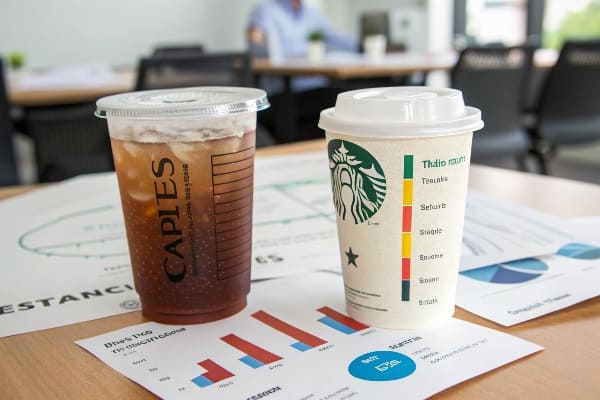
This isn't just a simple preference; it’s a strategic choice. I've spent my career helping brands like yours navigate this decision. After handling millions of both types of cups, I’ve learned that the question isn't "which is better," but "which is better for your specific goal." Let's break down the factors that really matter, beyond the surface-level arguments, so you can make a choice that truly serves your business.
Which cup best showcases your drink's appeal?
You want your cup to be a powerful marketing tool. But paper and plastic communicate in completely different ways, potentially sending a mixed message to your customers about your product's quality.
Plastic cups, especially PET, are unmatched for showcasing the drink's color, freshness, and quality through crystal clarity. Paper cups excel at displaying complex printed graphics and conveying a brand story directly on the surface, offering a canvas for visual marketing.
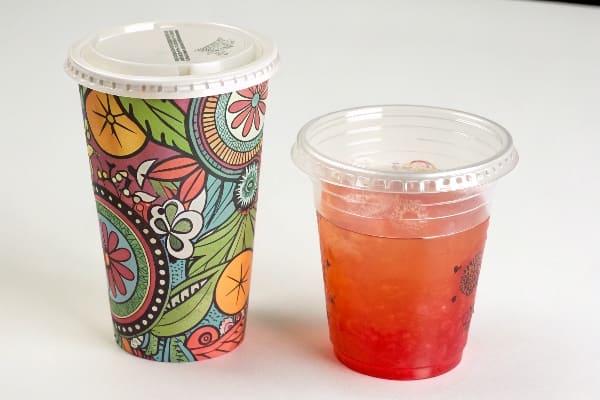
In my experience, the visual strategy boils down to one question: are you selling the drink or the brand story? Both are valid, but they lead to different packaging choices. The cup is your product's first impression, and you have to decide what you want that impression to be. It's a choice between highlighting what's inside the cup versus what's printed on the outside.
The Power of Transparency: Selling the Drink
When you have a visually stunning product, like a layered iced latte, a vibrant fruit smoothie, or bubble tea with colorful boba, the cup should be invisible. This is where PET plastic is the undisputed champion. Its glass-like clarity makes the drink the hero. It communicates freshness and quality instantly. Customers can see exactly what they're getting, which builds trust and enhances appetite appeal. At Lehong Packaging, we specialize in high-clarity PET cups for this very reason. They turn your beverage into a display piece.
The Power of the Canvas: Selling the Brand
Paper cups operate on a different principle. They act as a handheld billboard. You can print rich, full-color designs, tell your brand story, and communicate promotions directly on the cup. A paper cup's strength is its ability to carry a detailed visual identity and offer a warm, tactile experience, which is great for hot coffee. You're not just selling a drink; you're selling an experience and a brand message that the customer holds in their hands.
You need to manage your packaging budget carefully. But surprising functional failures and hidden costs can quickly eat into your profits, causing operational headaches and unhappy customer feedback.
The biggest hidden cost of paper cups is the mandatory plastic lid, adding a second inventory item and expense. They also have a weaker structure, posing a higher risk of leaks. Plastic cups are typically a single-unit solution with lower purchasing costs and superior durability.
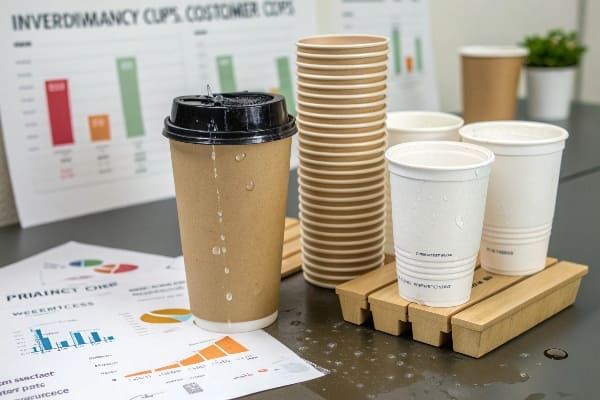
When clients come to me asking about unit price, I always push them to think about the "total cost of ownership." The price on the invoice is only part of the story. You have to consider all the associated parts, the risk of failure, and the impact on your operations. A cheap cup that leaks is one of the most expensive mistakes you can make. Based on what I've seen in the industry for over 15 years, the practical differences are huge.
A Head-to-Head Functional Comparison
| Feature | Plastic Cup (PET/PP) | Paper Cup |
|---|---|---|
| Structural Integrity | High. Rigid and resistant to pressure. | Lower. Can become soft when wet. |
| Lid Requirement | Lid is optional and part of the same material family. | A plastic lid is always required. |
| Leakage Risk | Very low. The material is inherently waterproof. | Higher. Relies on a thin plastic lining that can fail. |
| Overall Cost | Lower purchasing cost. Simpler supply chain. | Higher cost per unit, plus the mandatory lid cost. |
I once worked with a coffee chain that switched to paper cups to appear more "traditional." Within three months, they were calling me back. Customer complaints about leaks during delivery and the extra hassle of managing separate lid inventory were killing their operational efficiency. They quickly switched back to our reliable PP plastic cups for hot drinks.
How do you choose the right cup for your business goals?
Making the final choice between paper and plastic can feel paralyzing. Choosing based on assumptions rather than strategy can mean a mismatch between your packaging and your core business objectives.
Choose plastic cups if your goals are product visibility, structural reliability, and cost-effectiveness, especially for cold drinks. Choose paper cups if your priority is conveying a detailed brand narrative through print and you are targeting the premium hot beverage market.
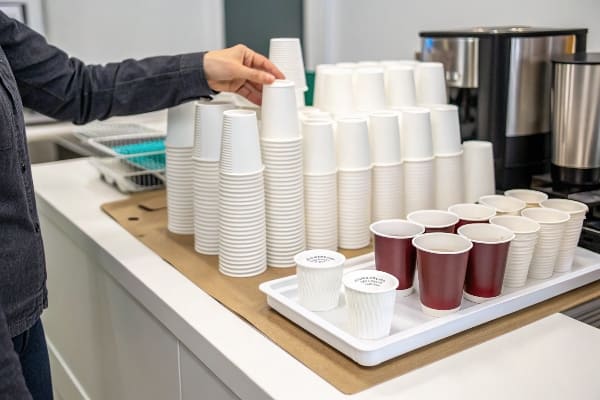
The right choice becomes clear when you stop thinking about the materials and start thinking about your business strategy. Your cup is a tool that should help you achieve your goals. Let's walk through the decision process I use with my clients. It simplifies the choice by focusing on what you want to achieve.
Scenario 1: Your Priority is Product Showcase & Cost Control
If you run a business centered around visually appealing cold drinks like smoothies, iced coffees, juices, or bubble tea, the choice is simple. You need a high-clarity PET plastic cup. It showcases the quality of your ingredients, makes your product look irresistible on display and in social media photos, and is more cost-effective. Its structural integrity also means fewer worries about spills and a better customer experience, especially for takeaway and delivery. This is the practical, high-impact choice for most modern beverage businesses.
Scenario 2: Your Priority is Brand Story & Tactile Experience
If your brand is built around a cozy, artisanal story, like a specialty hot coffee roaster, then a paper cup may be the better fit. The surface allows for detailed printing that can tell your story. The feel of a paper cup in hand can contribute to the warm, comforting experience you're selling. For this strategy to work, you must be willing to accept the higher total cost (cup + lid) and invest in high-quality paper cups and well-fitting lids to minimize the risk of leaks.
Conclusion
The best cup choice aligns with your business goals. Plastic excels in showcasing the product and controlling costs, while paper offers a canvas for branding but with serious functional trade-offs.