
Choosing the right coffee cup feels complicated. The wrong cup hurts your brand and budget. I will help you understand the key differences to make a smart choice for your business.
Disposable coffee cups mainly include paper (PE-lined, PLA-lined, double-wall), and plastic (PP, PET, PLA). Paper cups are common for hot drinks but hard to recycle. Plastic cups like PET are perfect for cold drinks, while PP is a durable choice for hot beverages.
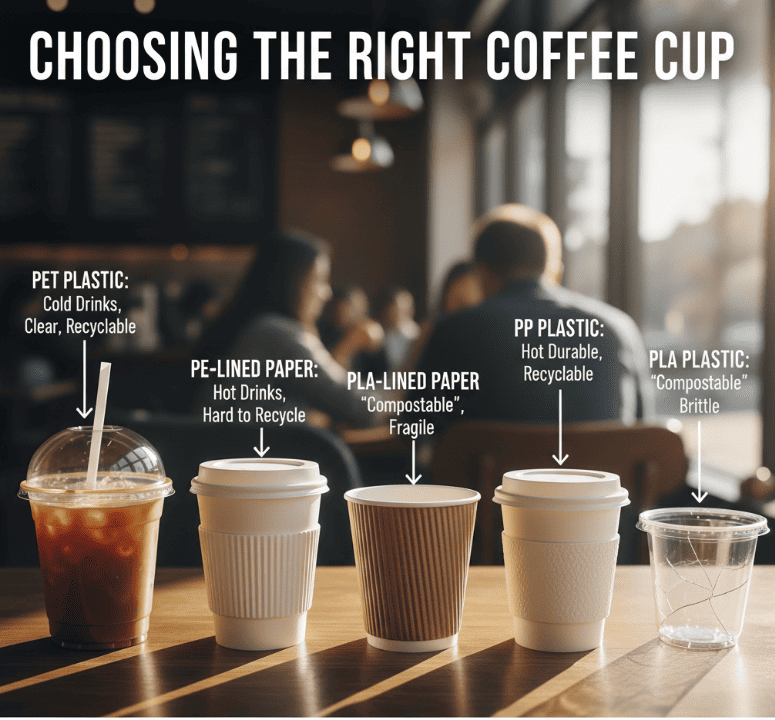
In my 15 years in the packaging industry, I've seen every type of cup imaginable. From a simple paper cup to advanced plant-based plastics1, each one tells a story. But the details are what really matter. The material you choose says something about your brand, your budget, and what you value. Let's break down each type, so you can see beyond the marketing and find what truly works for you. I've learned that the best choice is rarely the most obvious one.
Why isn't the standard paper cup as green as it seems?
Paper cups seem eco-friendly, right? But most cannot be recycled, creating massive waste. I'll explain the hidden plastic liner that causes this problem and what your real options are.
Most paper cups have a thin plastic polyethylene (PE) liner to prevent leaks. This mixed material makes them very difficult to recycle in standard facilities. While they feel natural, they often end up in landfills, creating a gap between perception and reality for eco-conscious brands.
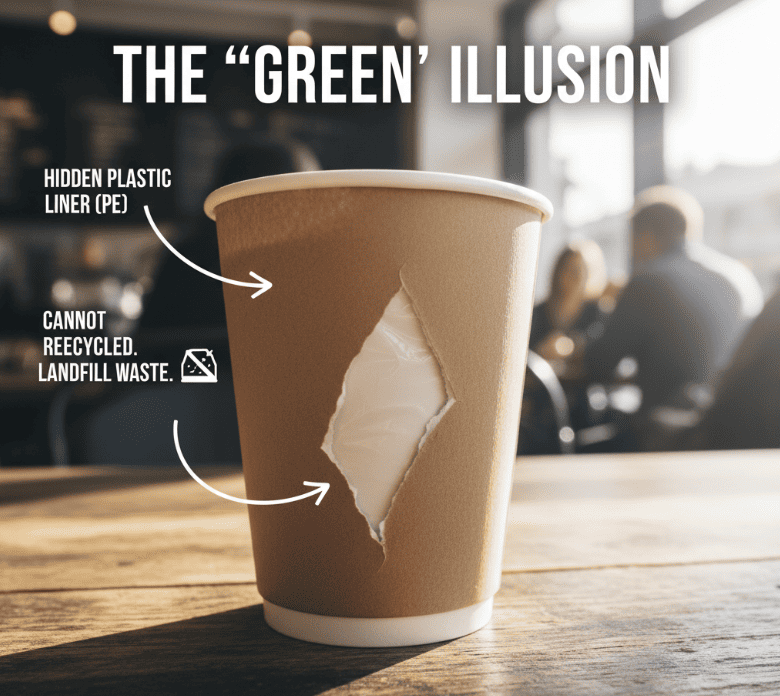
When I started in this business, I also thought paper was the answer. It feels natural and responsible. But the reality is different. That thin PE plastic coating is fused to the paper. Separating the plastic from the paper fiber is a specialized and costly process. Most municipal recycling facilities are not equipped to do it, so the cups are sent to the landfill. I've talked to countless brand managers who are shocked to learn this. They choose paper to build a green image, but the operational reality doesn't match the story. It's a classic case of good intentions meeting industrial limitations. This is a perfect example of how consumer feeling often drives decisions more than technical facts.
Here’s a quick breakdown of common paper cup types:
| Cup Type | Key Feature | Insulation | Recyclability |
|---|---|---|---|
| Single-Wall PE-Lined | Most common, standard cup | Poor | Very Difficult |
| Double-Wall PE-Lined | Two layers of paper for better insulation | Good | Very Difficult |
| PLA-Lined Paper | "Plant-based" plastic liner | Poor | Industrial Composting Only |
When should you choose a plastic cup like PET or PP?
Many brands avoid plastic because of public perception. But some plastics are highly practical and more easily recycled than paper cups. Let's look at why PP and PET are often the smarter choice.
Choose PET for cold drinks. Its crystal-clear appearance showcases beverages like iced coffee and smoothies, giving a premium feel. For hot drinks, choose PP. It is heat-resistant, durable, and widely recyclable, making it a more practical choice than lined paper cups.
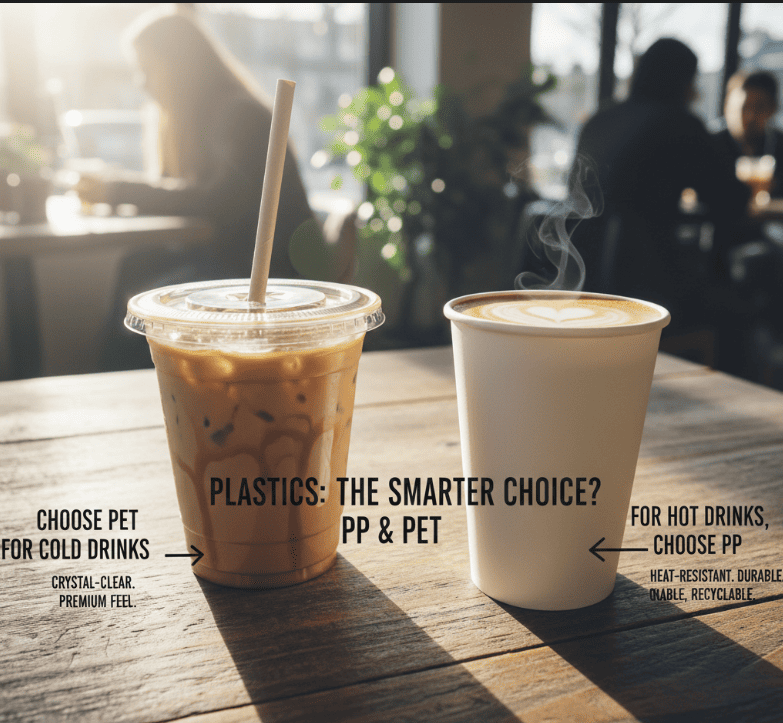
I believe in using the right tool for the job. When a customer orders an iced latte with beautiful swirls of espresso and milk, you want them to see it. That's where PET (Polyethylene Terephthalate) shines. It has a glass-like clarity that makes the drink itself part of the branding. It feels sturdy and high-quality in the hand. For cold beverages, nothing beats PET. On the other hand, for hot drinks, PP (Polypropylene) is the logical workhorse. It can handle high temperatures without deforming or leaching chemicals. And most importantly, both PET (#1) and PP (#5) are single-material plastics2 that are widely accepted in recycling programs. Unlike a PE-lined paper cup, there is no need for a complex separation process. The choice is clear from a technical and recycling standpoint.
Here’s a simple comparison of PET and PP:
| Feature | PET (Polyethylene Terephthalate) | PP (Polypropylene) |
|---|---|---|
| Appearance | Crystal Clear | Translucent or Opaque |
| Best For | Cold Drinks (Iced Coffee, Smoothies) | Hot Drinks (Lattes, Tea) |
| Temperature Resistance | Low | High |
| Recycling Code | #1 (Widely Recycled) | #5 (Commonly Recycled) |
Are 'plant-based' PLA and compostable cups really the answer?
PLA and compostable cups sound like the perfect green solution. They seem to solve all our problems. But in my experience, they create a new set of challenges that most businesses aren't ready for.
PLA plastic and uncoated compostable paper cups require specific industrial composting facilities to break down, which are not widely available. They cannot be recycled and will act like regular waste in a standard landfill. They are often brittle and have low heat tolerance.
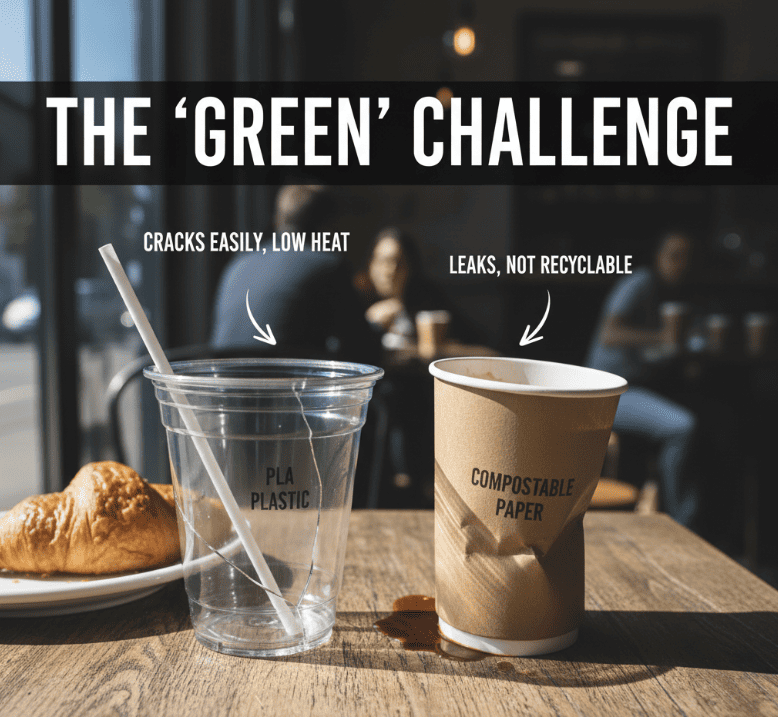
I have seen many brands invest heavily in PLA (Polylactic Acid) cups, thinking they are making the most sustainable choice. The marketing is powerful: "made from plants." But here is the truth. A PLA cup thrown in the trash goes to a landfill, where it may not break down for a hundred years, just like regular plastic. If it ends up in a plastic recycling bin, it contaminates the entire batch of PET or PP plastics, ruining the recycled material. Its only path to decomposition is an industrial composting facility with high heat and specific microbes. Most cities do not have this infrastructure. These cups are also more brittle and can't handle hot liquids well. I see these materials as tools for telling a brand story. They make the customer feel good. But for real-world impact and operational sense, they fall short for the vast majority of businesses.
Conclusion
The best coffee cup is a compromise. It balances cost, performance, and your brand story. Understand each material's reality to choose what truly fits your business, not just the marketing hype.