
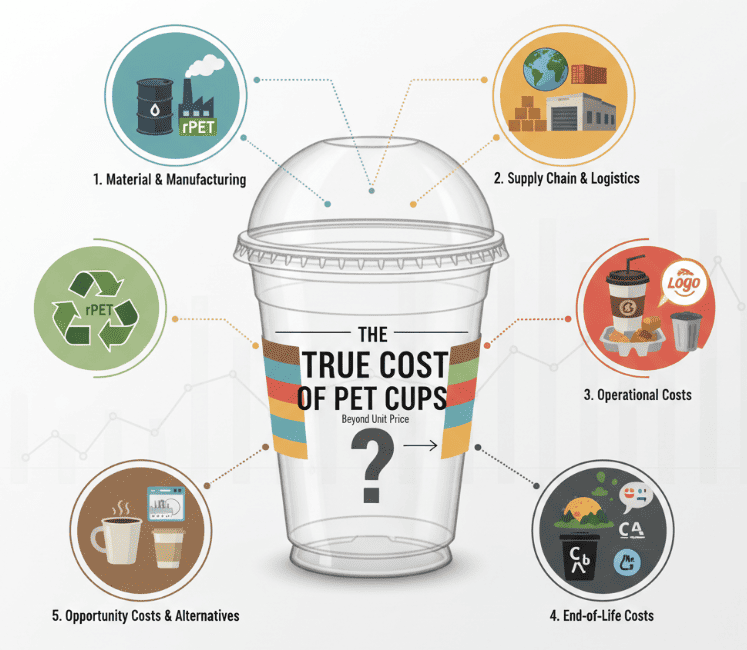
Focusing only on unit price can be a costly mistake. Hidden expenses from poor quality secretly drain your budget, leaving you with problems you never expected.
The real cost of PET cups includes hidden expenses from inefficient manufacturing. These are wasted materials from high defect rates, extra labor for sorting, and higher per-unit shipping costs. The biggest cost of all is the damage to your brand from customer complaints about faulty cups.
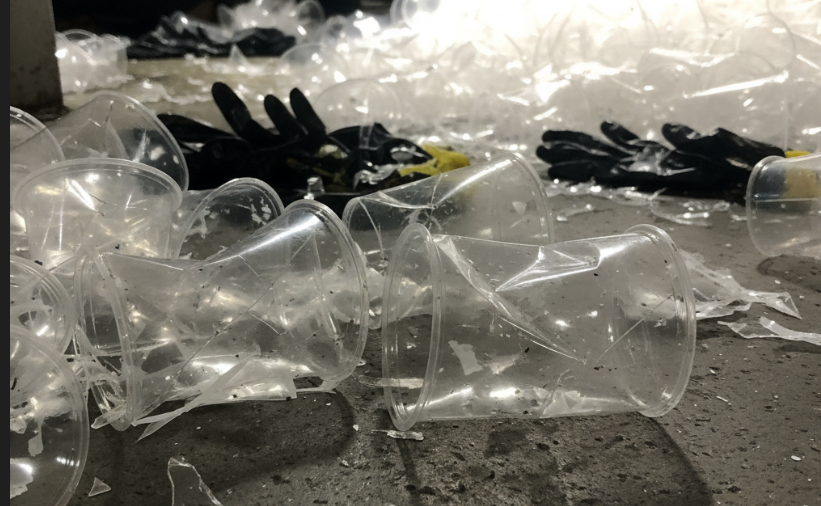
It's easy to get fixated on that price-per-cup number on an invoice. But I've learned from over 15 years in this business that the most expensive mistakes aren't on the bill. They are buried in production shortcuts and process failures that you end up paying for one way or another. Let's break down where the real costs are hiding, so you can make a smarter choice for your business.
How Do Manufacturing Shortcuts Add Hidden Costs to Your PET Cups?
That cheap cup quote seems like a great deal. But it often comes from factories that cut corners on molds and machinery, leading to surprise expenses that eat into your profits.
Manufacturing shortcuts like using cheap molds or old machines create high defect rates. This means you pay for wasted materials and the extra labor needed to sort out bad cups. It also increases the per-unit shipping and import cost for every good cup that makes it through.
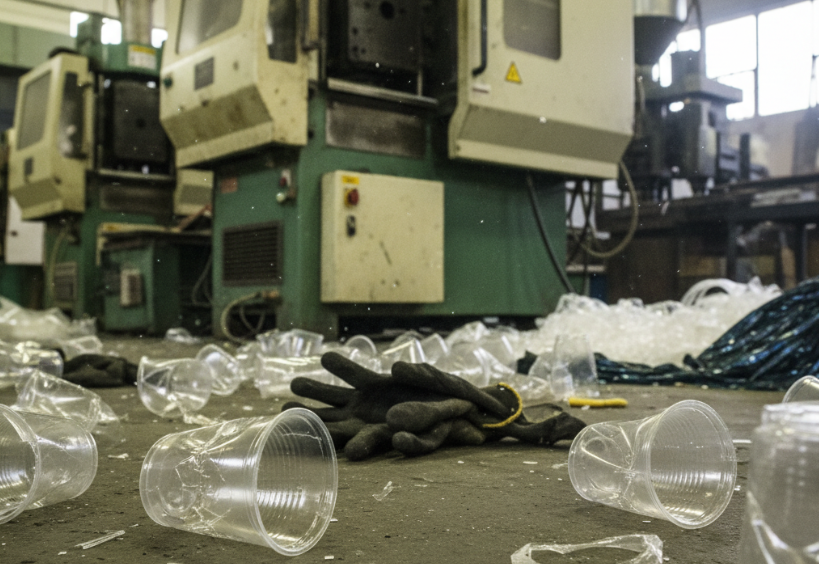
When I started Lehong Packaging, I saw so many clients struggling with this. They would get a low price, but then face a mountain of problems. The thermoforming industry1 might seem traditional, but the difference between a great supplier and a bad one is huge. While China has a strong supply chain for food-grade plastic pellets, giving us a raw material advantage, that's not the biggest factor in the final cost. The real key is the production source: the quality of the molds, the advancement of the machinery, and the experience of the team. Using cheap molds and outdated machines drastically increases the scrap rate. This not only wastes raw materials but also requires more staff to manually find and remove the bad cups. This whole process inflates costs that you don't see on the initial quote.
The Hidden Cost Breakdown
| Cost Factor | High-Quality Supplier | Low-Cost Supplier |
|---|---|---|
| Stated Unit Price | $0.050 | $0.045 |
| Defect Rate | < 1% | 10-15% |
| Cost of Wasted Material | Minimal | Adds ~$0.0045/unit |
| Cost of Sorting Labor | Not Required | Adds ~$0.002/unit |
| Effective Unit Cost | ~$0.050 | ~$0.0515+ |
Could Defective PET Cups Cost You Your Peak Sales Season?
You have a big promotion planned for your peak season. Then, your shipment arrives, but it's full of defective cups. This is how a small saving turns into a huge loss.
Yes. High defect rates lead to longer production cycles because the supplier has to remake orders or spend days sorting products. This delay can cause you to miss promotional windows and lose significant revenue during your busiest times, directly impacting your bottom line.
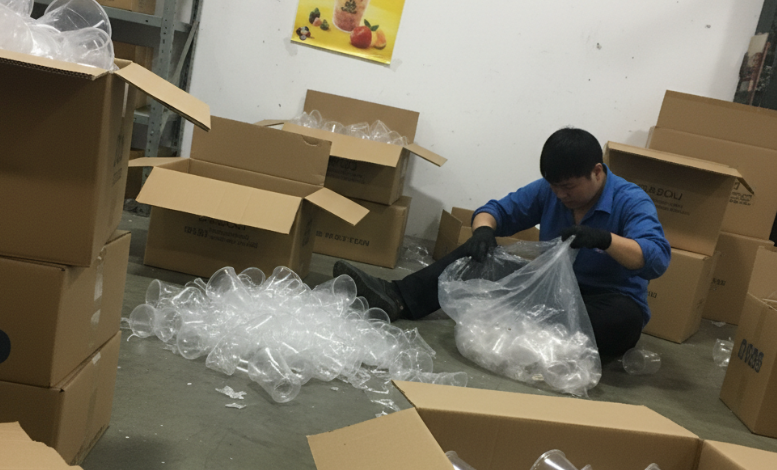
I remember a client, a growing coffee chain, who nearly missed their entire summer iced latte promotion. They had chosen a supplier based on a low price. The first batch of cups arrived just weeks before the launch, but nearly 20% were unusable because of cracks and poorly formed rims. This created a panic. High defect rates don't just create waste; they create a domino effect of delays. First, the initial production takes longer due to machine issues and constant quality checks. Then, the supplier has to spend days sorting the good from the bad, slowing everything down. If that fails and you discover the defects upon delivery, you are back at square one, but with no time to spare. A stable supply chain is critical for businesses that rely on seasonal sales. A missed deadline isn't just an inconvenience; it's lost revenue that you can never get back.
Is a Low Unit Price Worth Risking Your Brand's Reputation?
You need to save money on packaging to protect your margins. But what happens when a single bad cup leads to a viral customer complaint? Your brand's reputation is on the line.
No. The biggest hidden cost of cheap cups is brand damage. When a customer gets a cracked or leaking cup, they don't blame the cup maker—they blame you. This leads to negative reviews, social media complaints, and lost trust that can ruin your business.
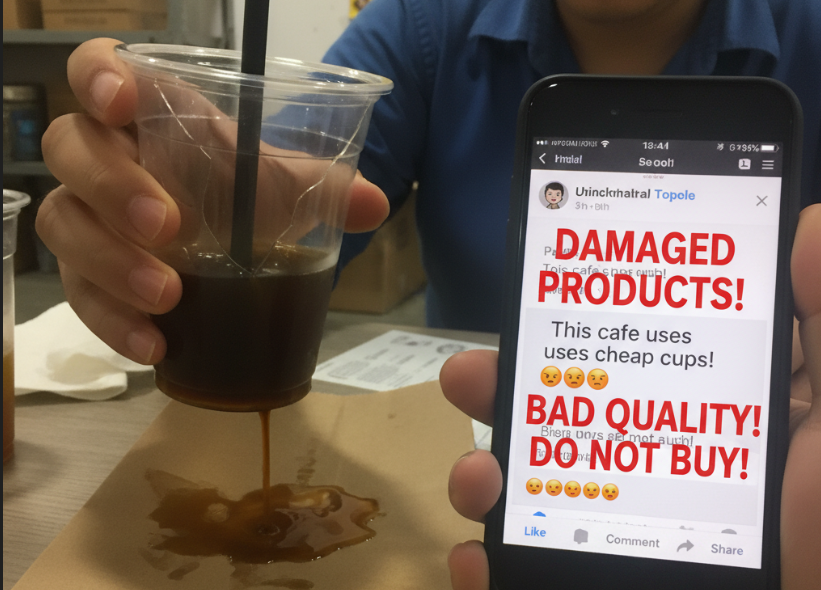
For a procurement manager like Emily, the goal isn't just about finding the lowest cost. Her primary job is to protect her beverage chain's brand. For any food and beverage company, the packaging is a critical part of the customer experience. A premium drink served in a flimsy, cracked cup immediately feels cheap and untrustworthy. This is where the true cost becomes painfully clear. The damage goes far beyond the price of a single cup. It creates a chain reaction that can be incredibly expensive to fix. A customer gets a leaky cup, it spills on their clothes, and they post an angry review with a photo online. Future customers see that review and decide to go to your competitor instead. Suddenly, all the money you spend on marketing is being undermined by poor packaging. Investing in quality packaging isn't an expense; it's brand insurance.
The True Cost of a Single Bad Cup:
- Product Replacement & Refunds: The direct cost of making the customer happy again.
- Negative Online Reviews: Permanent damage to your online reputation.
- Lost Customer Loyalty: That customer will likely never return.
- Damage to Potential Sales: New customers are turned away by the bad reviews.
Conclusion
Look beyond the unit price. The true cost of PET cups is tied to production quality. Choosing a reliable supplier protects your budget, your timeline, and most importantly, your brand's reputation.
Explore this resource to understand the latest trends and challenges in the thermoforming industry, enhancing your decision-making. ↩