
Ever wonder why some cups feel sturdy and premium while others crack and leak? The hidden details in manufacturing create this gap, turning a simple cup into a brand asset or a liability.
Disposable cups are made by melting plastic pellets, extruding them into a flat sheet, then using heat and a vacuum (thermoforming) to shape the sheet in a mold. The key to quality isn't just the process, but obsessively controlling every variable within it.
<sup id=](https://touchplastic.com/wp-content/uploads/2025/10/article9-1.jpg) 1 machine in action, shaping a sheet of plastic into rows of cups" title="Disposable Cup Thermoforming Process" />
1 machine in action, shaping a sheet of plastic into rows of cups" title="Disposable Cup Thermoforming Process" />
I've spent years on the factory floor. I've been yelled at by clients over bad batches, I've seen expensive molds crack, and I’ve learned every single thing that can go wrong. Making a cup that just holds water is easy. Making millions of cups that are perfectly consistent, fit lids tightly, and have crystal clarity—that's a different story. Let me walk you through how it really works, from someone who has lived it.
Why is choosing the right plastic the most critical first step?
You think a plastic is just a plastic? This one decision can doom your entire project before a single machine is turned on. The wrong choice leads to production nightmares and a poor final product.
The raw material—be it PET, PP, PS, or PLA—defines the cup's final properties like clarity, heat resistance, and durability. Choosing the wrong plastic means you can never achieve your desired quality, no matter how well you run the machines.
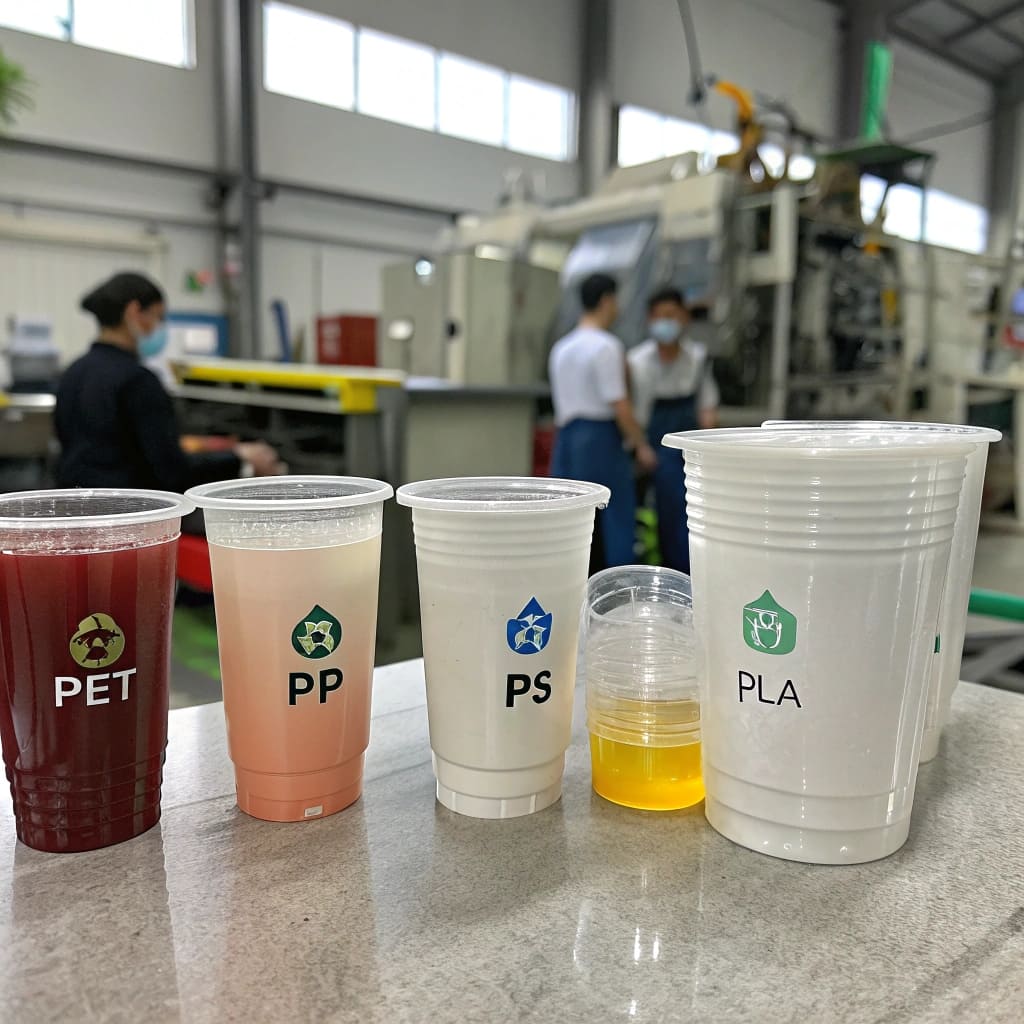
I see this mistake all the time. A client wants a cheap cup, so they push for a material that can't deliver the premium feel they also want. It's a classic case of being penny-wise and pound-foolish. Each plastic has its own personality, and if you don't respect it, you will pay the price later. If you get this first step wrong, everything that follows is just a waste of time and money.
Meet the Plastics
Think of these materials as ingredients. You can't make a great cake with bad flour.
| Material | Key Trait | The Good | The Bad & Ugly |
|---|---|---|---|
| PET | The Premium Choice | Crystal clear, looks high-end, strong. | Very sensitive to temperature changes during molding. A narrow window for success. |
| PP | The Workhorse | Cheap, durable, and handles heat well. | Looks "hazy" or foggy. Not great for showcasing cold drinks. |
| PS | The Brittle Relic | Easy to form and very cheap. | Extremely brittle. Cracks easily during shipping or handling. A customer service nightmare. |
| PLA | The Eco-Idealist | Made from renewable resources, compostable. | High cost, not heat resistant, and can be brittle. |
Choosing the material isn't a technical detail to delegate; it's a strategic decision. You have to match the plastic's personality to your brand's needs.
What really happens on the factory floor to make a cup?
You might picture a simple, flawless production line. The reality is a carefully balanced process where tiny deviations in temperature or timing can cause huge problems like weak spots, inconsistent weight, and poor lid fit.
Plastic pellets are melted and squeezed into a sheet of precise thickness. This sheet is then reheated, drawn into a mold with a vacuum, shaped, and finally cut out and stacked. Every step is a potential failure point if not perfectly controlled.
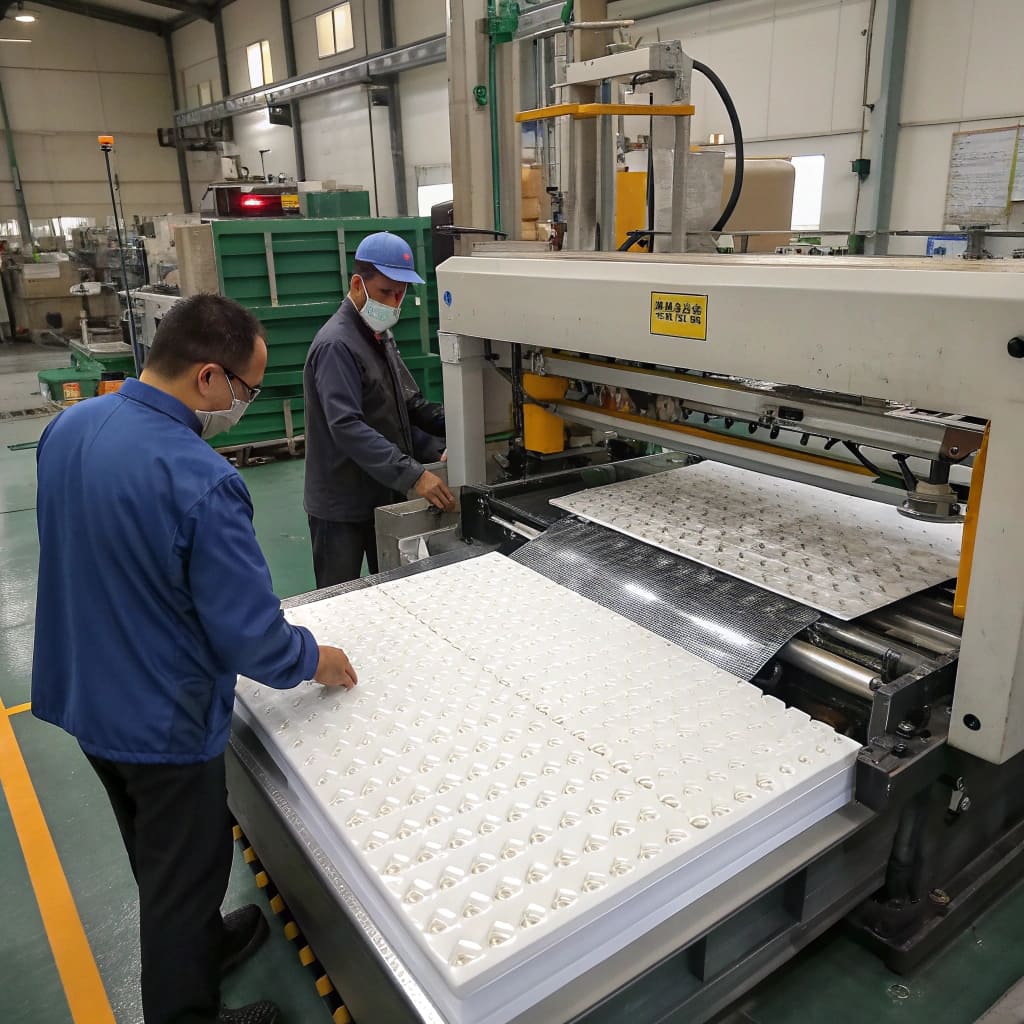
This part of the process is where experience matters more than textbook theory. An operator's ability to "feel" the machine and adjust for tiny environmental changes is what separates a high-yield factory from one that produces tons of scrap. Let me break down the critical stages where things either go right or go horribly wrong.
Step 1: Extrusion is More Art than Science
It starts with plastic pellets2 fed into a giant screw heated to over 200°C. This melts them into a uniform liquid that gets pushed out into a continuous sheet. The absolute key here is sheet thickness. A stable thickness, with a tolerance no more than ±0.02mm, determines if your final cup weight is consistent. Many small factories don't have closed-loop monitoring here. The result? Your customers complain that "some cups feel flimsy," and the root cause is right here.
Step 2: Thermoforming is the Soul of the Cup
Next, that big plastic sheet is reheated to a malleable temperature and fed into the molding station. A mold presses down, and a powerful vacuum sucks the hot plastic into the cup-shaped cavities. This is where everything can go wrong. If the sheet is too cold, the cups won't be fully formed. If it's too hot, you get white marks or bubbles. The mold temperature, sheet temperature, vacuum pressure3, and forming time—it's a delicate dance controlled by the skill of the shift supervisor.
Step 3: Trimming and Stacking, the Final Hurdle
After forming, you have a large sheet with rows of cups embedded in it. A trimming press then punches the cups out from the surrounding "skeleton" material. The cups are then automatically pushed into stacks. This sounds simple, but if the cups are still too warm when stacked, the pressure can deform the rim. This is a primary cause of what clients call me about most: "The lids don't fit!" It's often because the cup mouth has shrunk ever so slightly during this final step.
Why is quality control about prevention, not just inspection?
Relying on a person at the end of the line to find bad cups is a deeply flawed strategy. By that point, you've already wasted material, energy, and machine time. You're just paying someone to find your expensive mistakes.
A modern, mature factory builds quality into the process itself. It uses sensors and automated systems to monitor machine parameters in real-time. This philosophy prevents defects from happening in the first place, rather than just catching them after the fact.
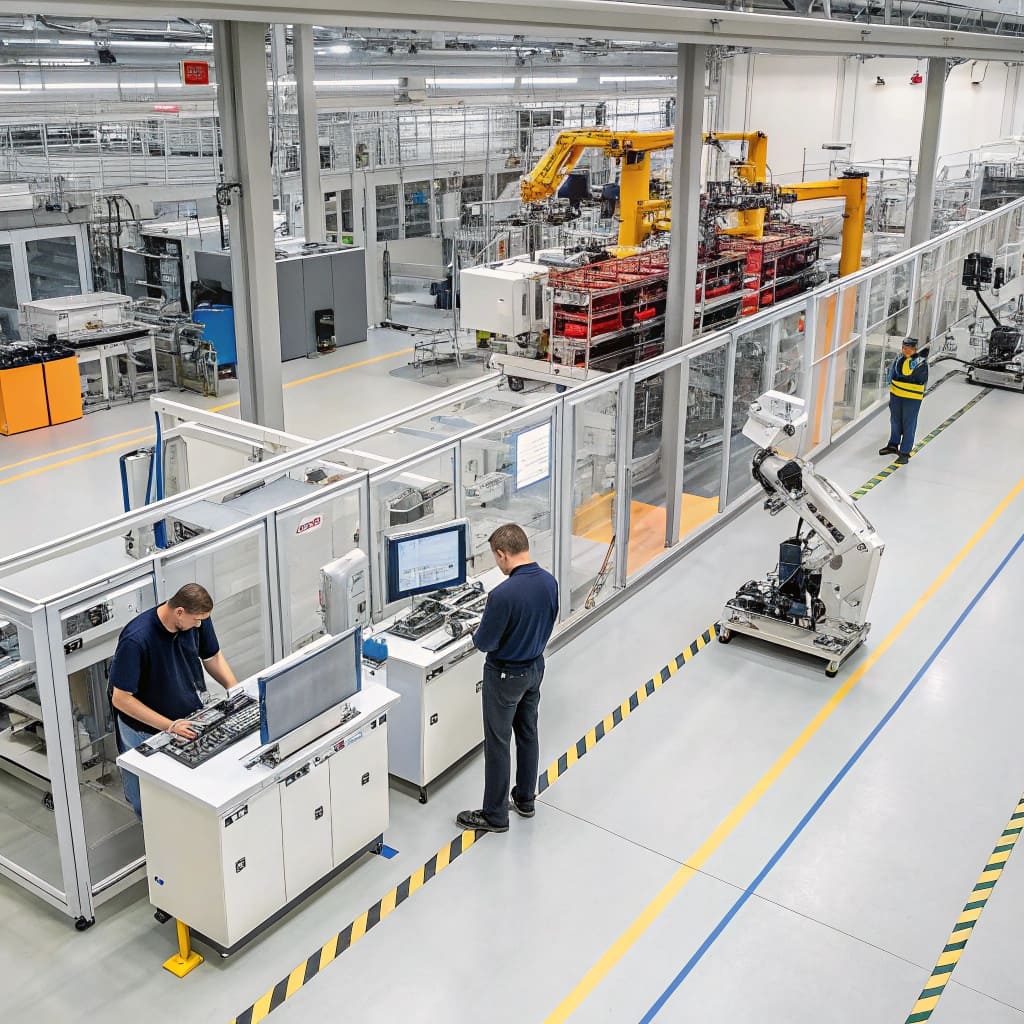
The biggest lesson I've learned is this: you can't inspect quality into a product. True quality comes from a process that is so stable and well-controlled that it's incapable of making a bad part. This is the difference between a cheap supplier and a reliable partner. It’s not about promises; it’s about the systems they have in place.
The Two Philosophies of Quality
| The Old Way (Inspection) | The Right Way (Prevention) |
|---|---|
| A QC inspector stands at the end of the line. | Sensors are built into the machine. |
| They visually check cups for obvious defects. | The machine monitors its own performance. |
| Bad batches are sorted or thrown away. | A process deviation triggers an alarm or shutdown. |
| This approach is costly and unreliable. | This approach ensures consistency and saves money. |
At a truly professional factory, the machine is the first line of defense. Does the mold temperature vary by more than 3°C? An alarm sounds. Does the weight of a cup deviate by more than 0.1 gram? The machine stops automatically. This is what a real quality system looks like. It's not about finding mistakes; it's about making them impossible to create. The brutal truth of this industry is that making one good cup is easy. The real skill is maintaining a 95% good product rate, day in and day out. That's the game we play.
Conclusion
Making a disposable cup is simple. But making millions of them perfectly requires deep process mastery. True quality comes from preventing errors, not just catching them at the end.